There are items in your quote.








Most common mistakes when charging li-ion forklift batteries
Lithium-ion batteries enable fast and efficient charging, but only when used correctly. To maintain their performance and maximise their service life, avoid the following common mistakes.
Do not fully discharge the battery
A common misconception is that a lithium-ion battery should be completely discharged before recharging. This is not true. Deep discharging can damage battery cells and permanently reduce their capacity. Opportunity charging during breaks or shift changes is recommended and does not harm the battery.
Occasionally complete the charging cycle
One of the key advantages of Li-ion batteries is that they support opportunity charging during breaks and shift changes. However, it is still recommended to occasionally allow the charging cycle to complete fully. During the final stage of charging, the Battery Management System (BMS) monitors the condition of individual cells and performs cell balancing. This helps maintain optimum battery performance and accurate state-of-charge indication while reducing the risk of uneven cell loading and extending battery life.
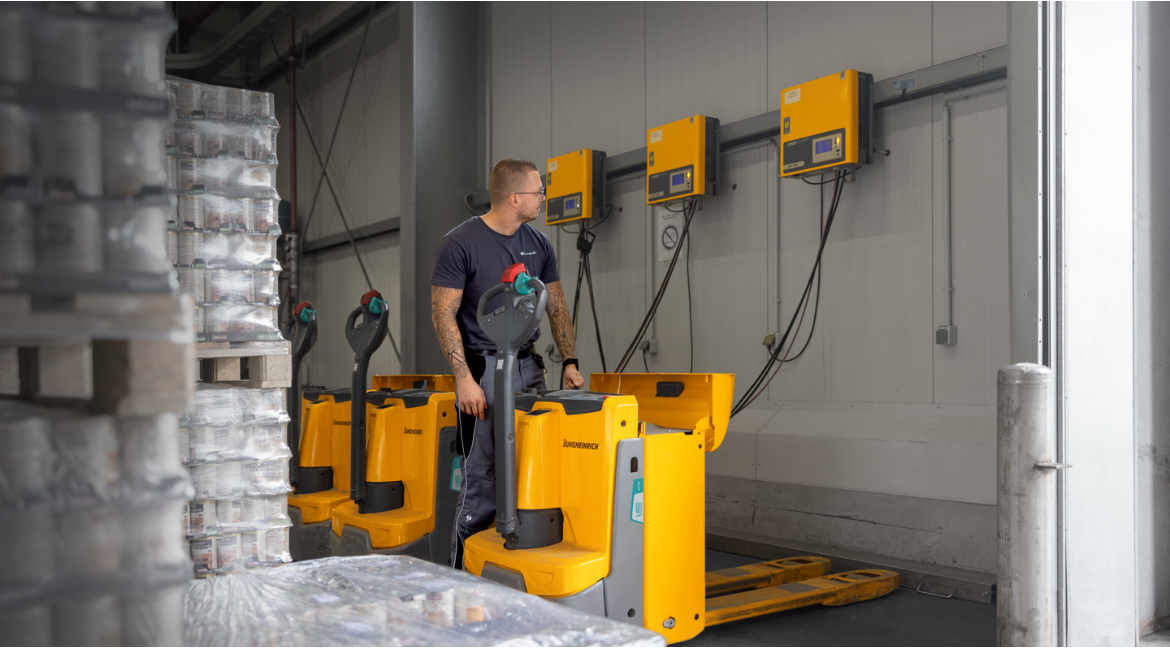
Do not disconnect the charger during charging
Before disconnecting the charger, always stop the charging process using the appropriate switch or follow the manufacturer's instructions. Disconnecting the charger under load can create an electrical arc, placing stress on connectors and electronic components and potentially causing damage.
Charge the battery at the correct temperature
Always charge the battery within the temperature range specified by the manufacturer. Charging at excessively high or low temperatures can negatively affect battery performance and service life.
Do not ignore BMS warnings
The Battery Management System (BMS) continuously monitors the battery's condition. Warnings relating to high temperature, faults, or cell imbalance indicate issues that should be addressed promptly. Ignoring these warnings may result in reduced performance or permanent battery damage.
Proper charging helps maximise Li-ion battery life, minimise maintenance costs, and ensure dependable forklift performance.
Published: 1.7.2026